The Secret Life of Akoya: 10 Days Inside Japan's Protected Pearl World
After a lifetime of admiring pearls from a distance, a ten-day immersion into the oyster bays of Tsushima, Sasebo, and the sorting rooms of Kobe changed my perspective forever. This isn't just a look at the jewelry trade; it's an exploration of the Japanese concept of harmony, where animal welfare, environmental stewardship, and centuries of tradition converge. From the quiet patience of the farmers to the high-stakes sorting floors of the Japan Pearl Exporters Association (JPEA) in Kobe, here is what it truly takes to bring a pearl from the sea to the light.
10 Insights: The Reality of Japanese Akoya Pearls
Before we dive into the misty bays of Tsushima, here is the "Short-List" of what I discovered on the ground with the JPEA:
- Farming, Not Manufacturing: It is closer to agriculture than industry. Nature leads; humans merely guide.
- Time is the Decisive Ingredient: You cannot "fast-track" lustre. It requires years of stable, patient conditions.
- The Sea Holds the Veto: Typhoons and rising temperatures mean every harvest is a high-stakes gamble.
- Harmony is a Business Practice: Care for the ecosystem is the only way to ensure a profitable harvest.
- A Dynamic Market: Akoya pearls are evolving rapidly to meet modern fashion and global demand.
- Scarcity is Real: Limited production and high demand (especially from China) are shifting the value landscape.
- The "Kobe Factor": A pearl's final value is often decided in the sorting rooms, under natural daylight.
- Mastery is a Learned Skill: Discerning the finest nuances of lustre takes decades of focused experience.
- The Beauty of Imperfection: There is a growing movement to embrace "unique" shapes for younger generations.
- A Pearl is a Story: Once you see the journey from bay to box, you never see "just a pearl" again.
It was a warm July evening when a message appeared on my phone, the kind of message that feels casual when you first read it, yet lingers longer than expected once the screen goes dark. "I would like to connect you with the president of the Pearl Association of America," it read.
At the time, it felt like a kind introduction, nothing more than a thoughtful gesture between people who move within the same industry. I could not yet know that this small message would quietly unfold into a ten-day journey to Japan, nor that it would bring me closer to the origin of Akoya pearls and to questions I had been carrying with me for far longer than I realized.
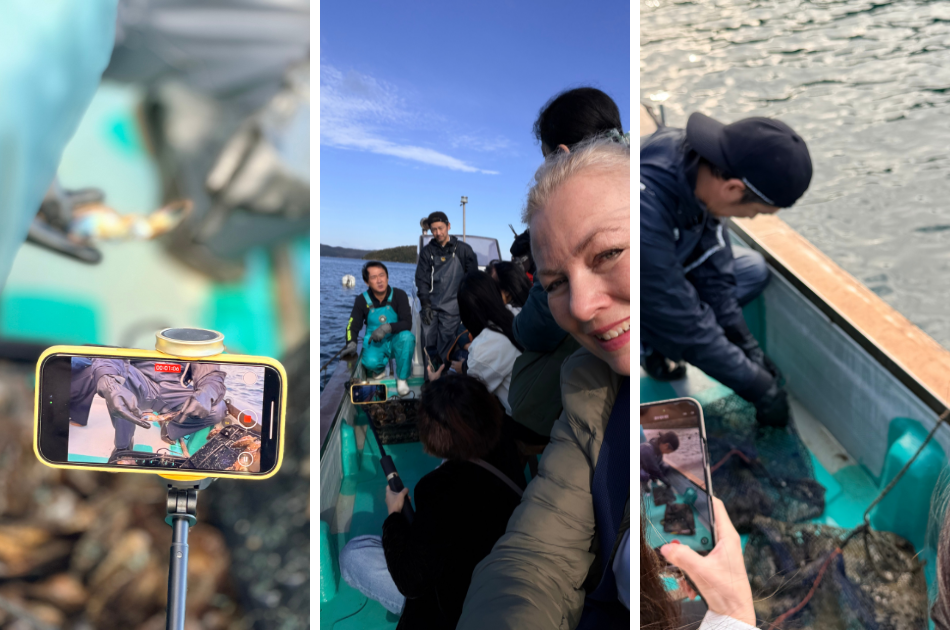
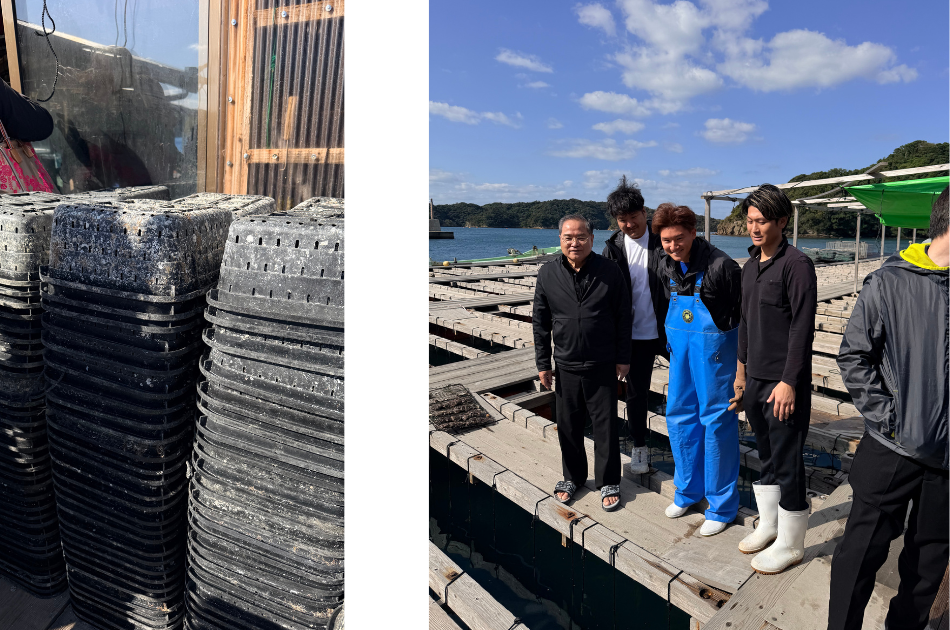
Watching a pearl farm in Tsushima, Akoya pearls in oyster.
On the 3rd of November, I boarded a plane from Amsterdam to Fukuoka, traveling east with curiosity rather than certainty. I have loved pearls for a long time, and like many people who work around them professionally, I believed I understood them reasonably well. As is often the case in life, that sense of knowing dissolved quickly once learning truly began. The more I saw, the clearer it became how much there still was to learn.
A shared intention
In Fukuoka, I met Jeremy Shepherd, his wife, Hisano, and the small international group that would be traveling together. Jeremy is the president of the Pearl Association of America, fluent in Japanese, deeply knowledgeable, and closely connected to the Japan Pearl Exporters Association (JPEA).
This journey exists because of that collaboration. The intention behind it is clear and generous: to invite influential voices within the jewelry industry to step away from second-hand knowledge and see the world of Akoya pearls first-hand. Not through brochures or statistics, but through experience, patience, and proximity.
 Source: https://www.bizzita.com/images/Japan/33.png Rename to: tsushima-pearl-farm-bay-statue-pearl-diver.png Alt text: Stone
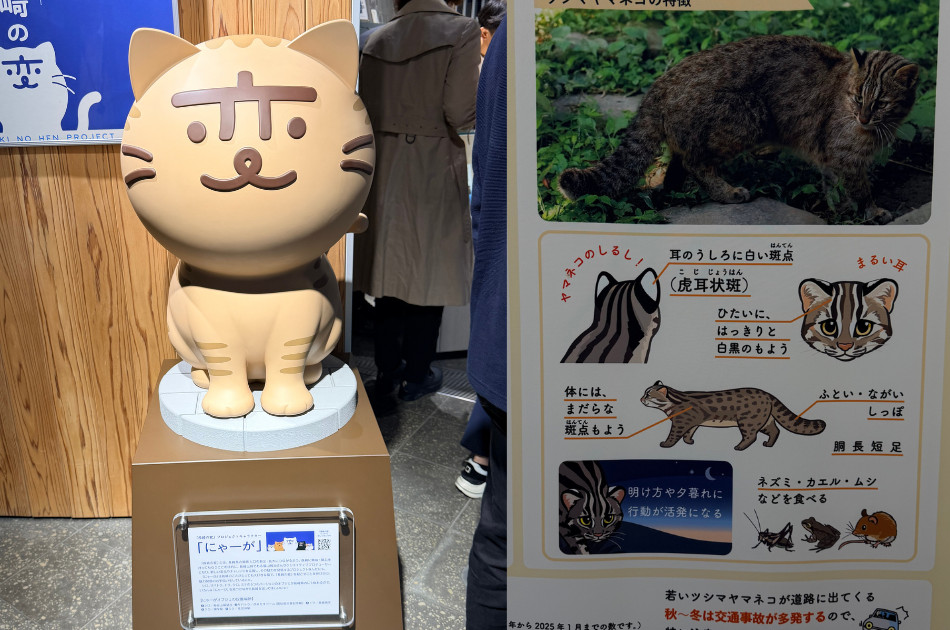
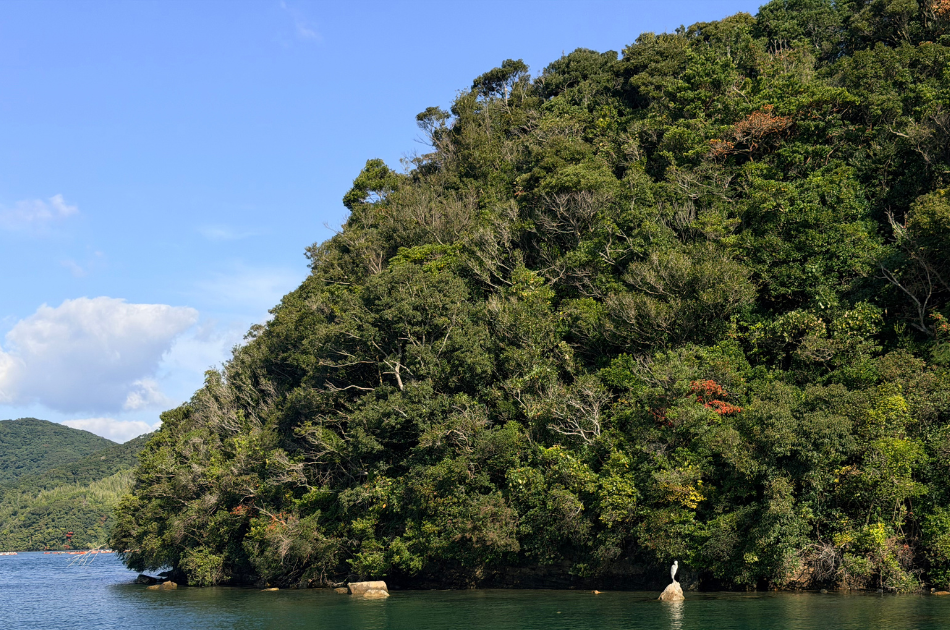
The next morning began early, earlier than my body would have preferred, but there was little time to dwell on fatigue. We were already on our way back to the airport, heading for Tsushima, an island suspended between Japan and South Korea. From the air, the island slowly revealed itself, a dense forested island edged by water, calm and almost untouched. It is home to the critically endangered Tsushima leopard cat, and even the warning signs reflected a particular Japanese tenderness, illustrated in soft kawaii style.
Animals have always had a special place in my heart, so arriving in a place where protection and care seem woven into everyday life felt quietly reassuring.
Where care begins
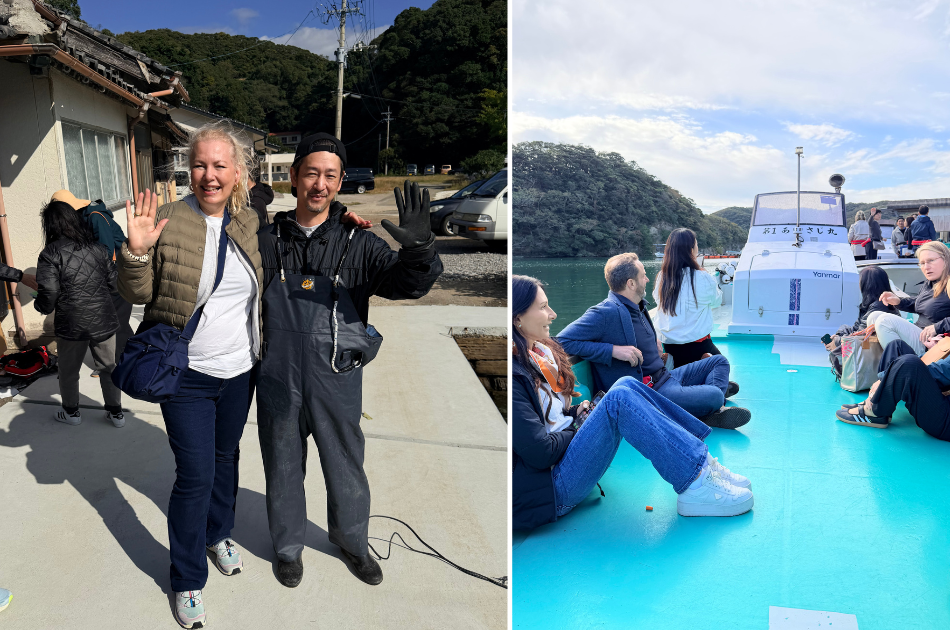
We crossed the island by road, through hills and forests, catching glimpses of the sea, before arriving at a small bay where the owner of the Kitamura Pearls Oyamakoshi Farm was waiting for us. After a warm welcome, we stepped into small boats without seats and drifted into the bay, where the pearl farm revealed itself modestly, as if it belonged there in the most natural way.
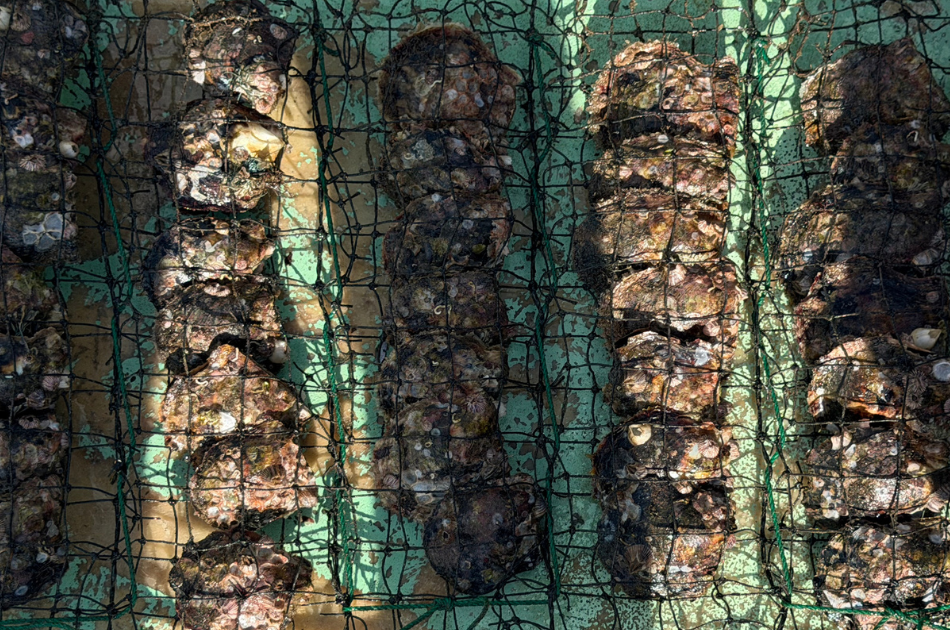
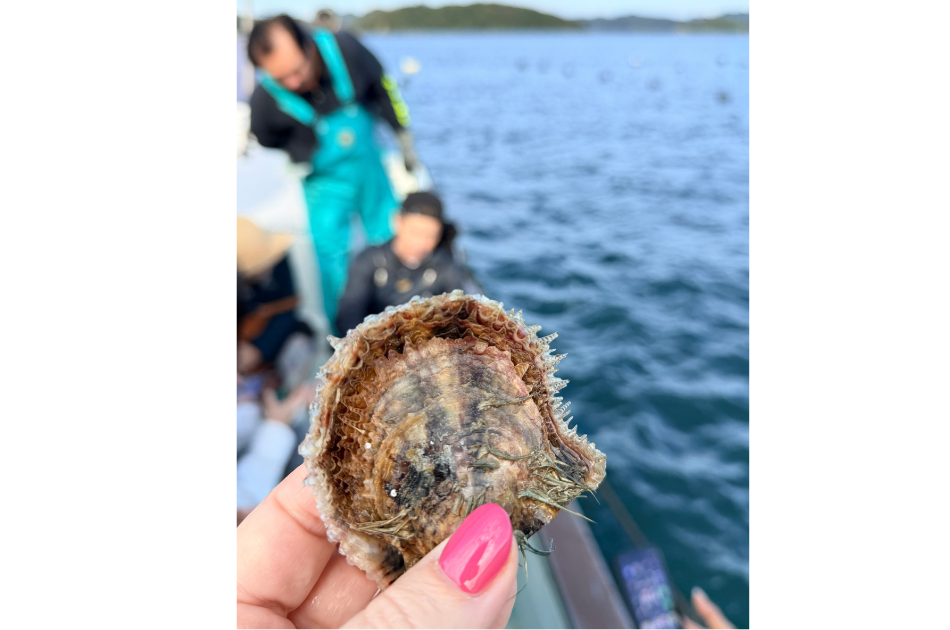
At our first stop, baskets were lifted from the water, holding one-year-old oysters clustered together in netted frames. They were barely larger than a two-euro coin, and although it may sound strange, holding them felt tender, as if you were briefly responsible for something both fragile and alive. Later, we were shown three-year-old oysters, now palm-sized, heavier, and more self-contained, and finally five-year-old oysters, each resting in its own compartment, already nucleated and carrying pearls that would only be harvested months later.
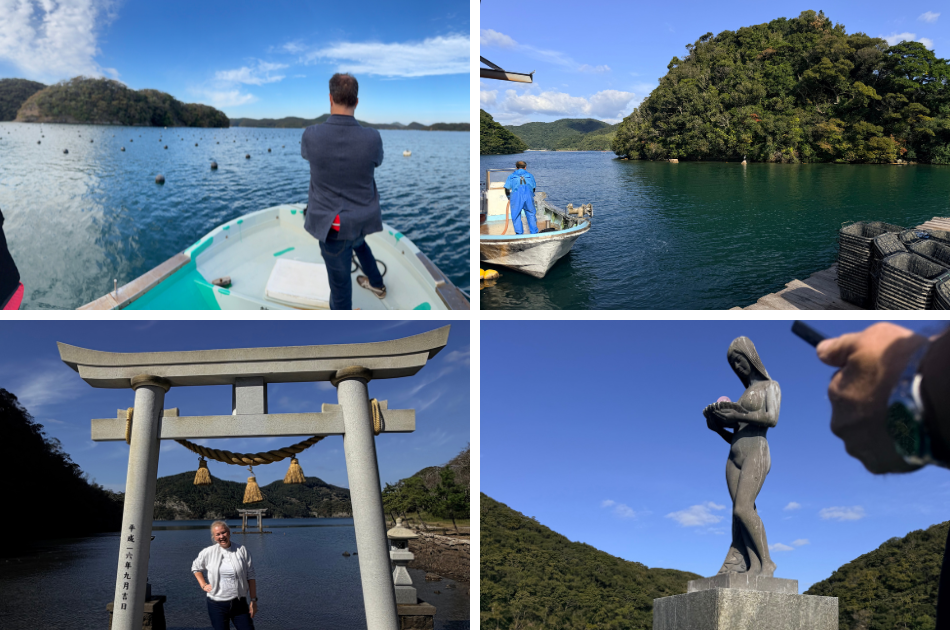
As we moved through the bay, a sculpture appeared in the water, depicting a woman holding an oyster in her hands with a soft pink pearl resting inside. It wasn't just a decoration, but an acknowledgement. Showing gratitude for what the oysters bring.
Harmony as practice
At another farm near Sasebo, called Sasebo Pearl Co., the visit began in a modest office where one word appeared repeatedly throughout the journey: harmony. Harmony between sea and farmer, between intervention and restraint, between patience and outcome.
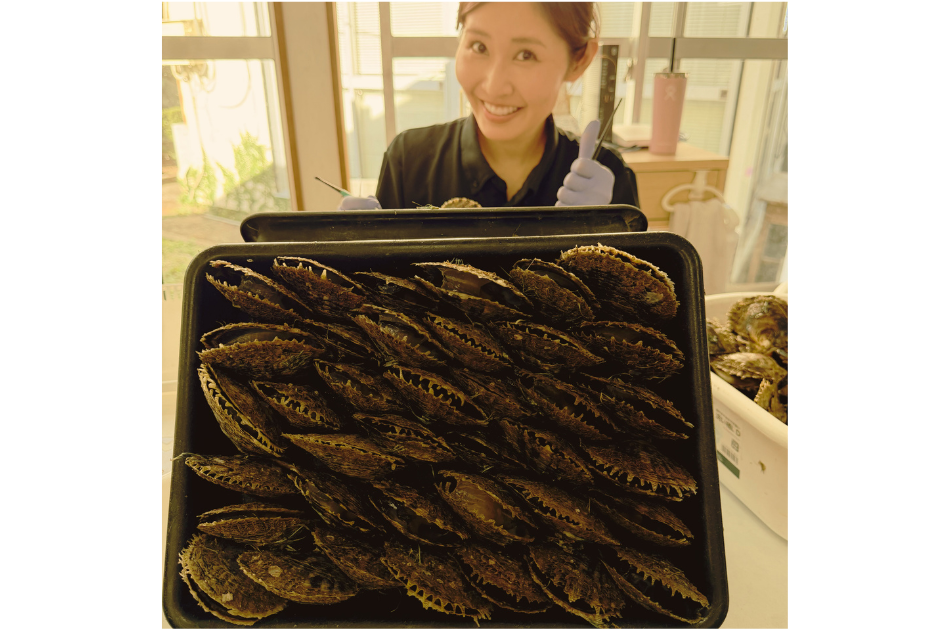
Oysters ready to be nucleated.
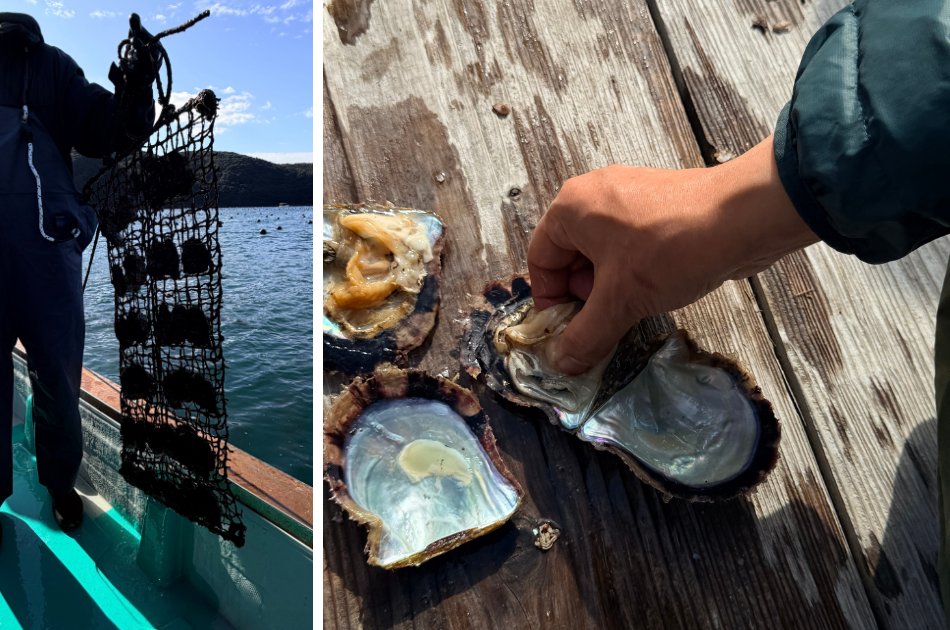
4 year old oyster and harvesting a pearl.
We watched women standing on floating platforms, dressed in rain boots and aprons, cleaning oyster nets by hand, removing small organisms, and returning the oysters carefully to the water. There was no rush, no visible pressure to optimize, only repetition and attention. Profits are not disconnected from care here. It is understood as the direct result of it.
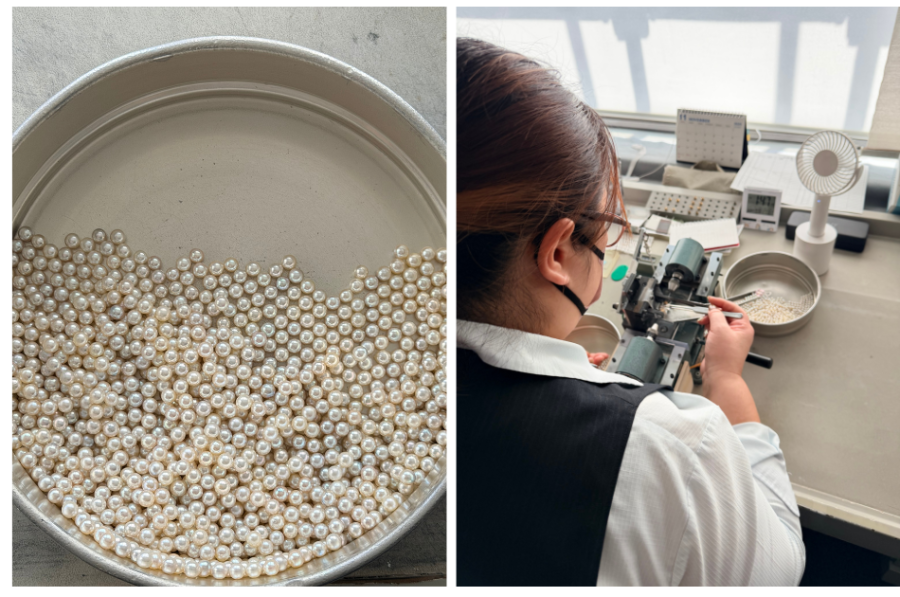
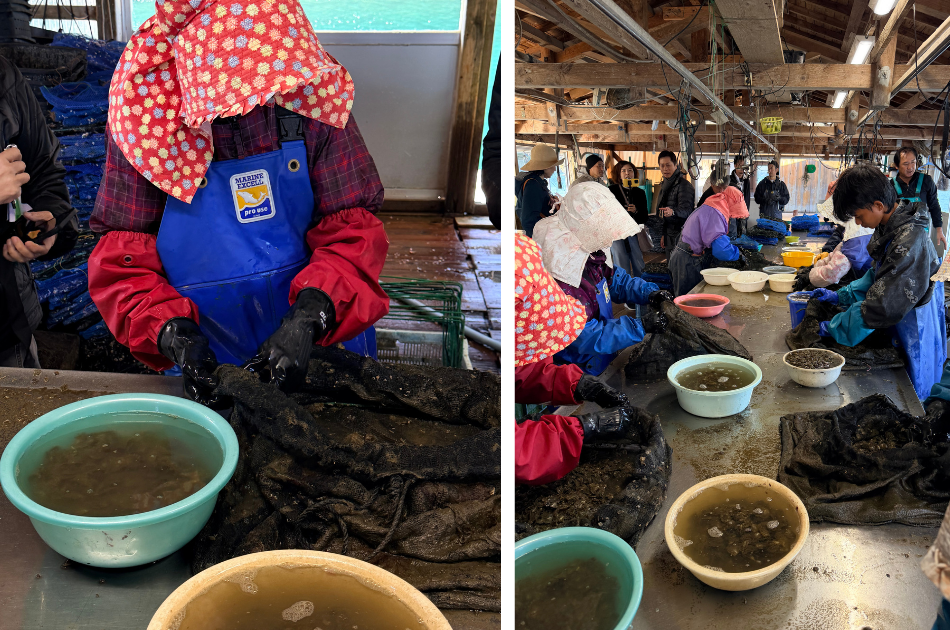
The nucleation process, which I observed later, is technically complex and requires extraordinary skill. Oysters are relaxed in oxygen-rich water, then placed in magnesium baths before being carefully handled in a wooden shed, where mostly women, though also some men, work with steady hands and deep concentration. A bead made of shell and a piece of donor mantle tissue are inserted, after which the oyster returns to the sea for another year or two.
Ethical stewardship
From my perspective, as someone sensitive to animal welfare, this was the part of the process that required the most reflection. Yet what helped me place that hesitation was understanding how deeply the Japanese view the entire cycle as interconnected. Only when the sea, the oyster, and its environment are treated with care does a harvest make sense. Shells and mollusks are returned to nature. Nothing is wasted. Only in this way is it considered right.
From the bay to history
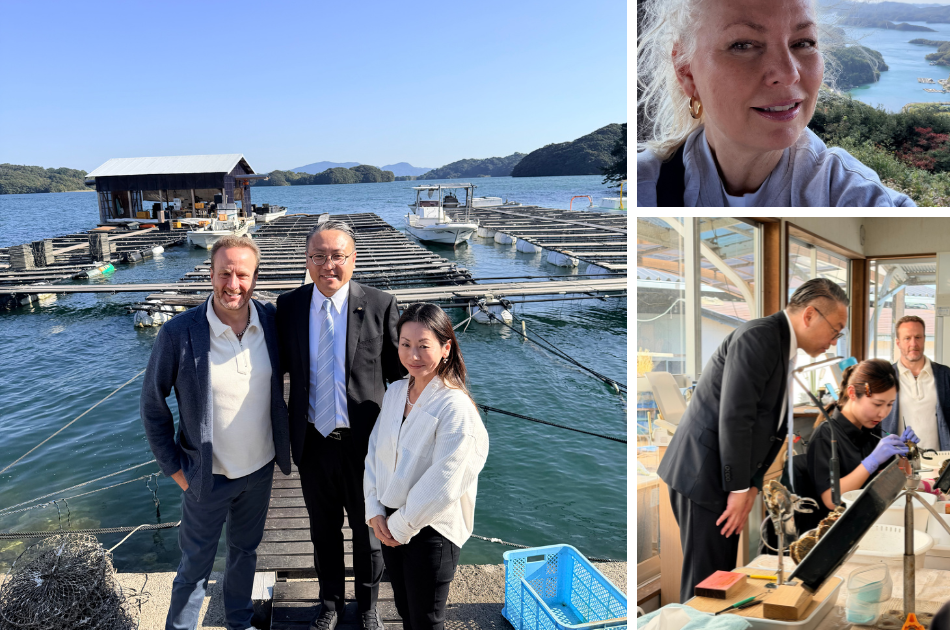
After a long morning on the water, we shared a simple but delicious lunch in a modest local restaurant before visiting the Fukae Pearl Farm, where we were welcomed and introduced to the governor of Nagasaki Prefecture, Hodaka Oishi. A group photo marked the moment, quietly underlining the importance of pearl farming to this region, not only economically, but culturally.
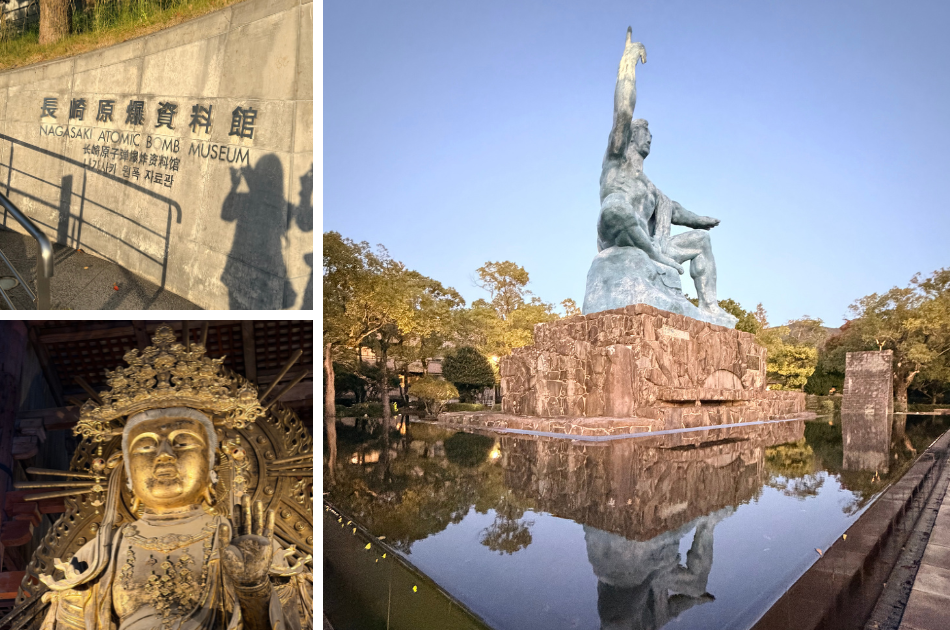
Later that afternoon, the tone shifted completely with a visit to the Nagasaki Atomic Bomb Museum. Confronting and deeply moving, it offers essential context for understanding Japanese ideas of responsibility, restraint, and care for life. These values are not abstract. They are shaped by history.
We walked quietly through the city afterwards. By evening, it was time to pack. The next day, we would travel to Kobe.
A Dutch-Japanese thread
While in Nagasaki, it was pointed out to me more than once how exceptional the relationship between Japan and the Netherlands has been and how long it has endured. That shared history becomes tangible at Dejima, the small artificial island in Nagasaki's harbour that, for more than two centuries, served as Japan's only official point of contact with Europe.
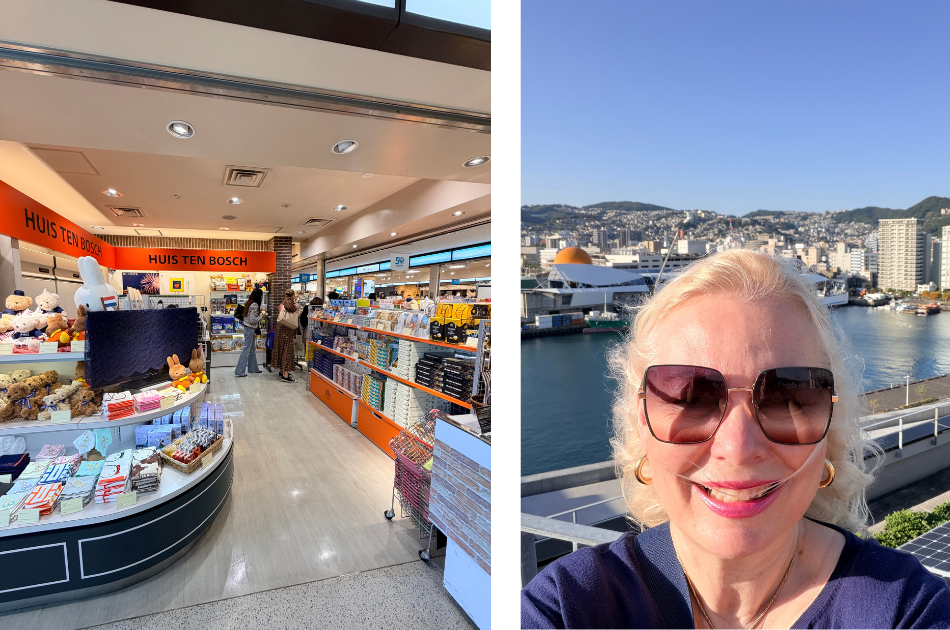
From 1641 until 1859, Dejima was not just a trading post, but a place of carefully managed exchange, where knowledge, goods, and ideas crossed borders under strict conditions. Walking through Nagasaki with that context in mind, I became more aware of how deeply Japan values continuity, restraint, and trust built over time.
It felt less like a history lesson and more like a reminder that meaningful exchange, whether in trade, culture, or pearls, has always required patience and mutual respect.
Kobe: where value is shaped
That Friday, we flew to Kobe, a city that plays a central role in the pearl industry. Many pearl companies are based here, as this is where pearls are treated, sorted, and prepared for market, a phase in which a significant part of their final value is determined.
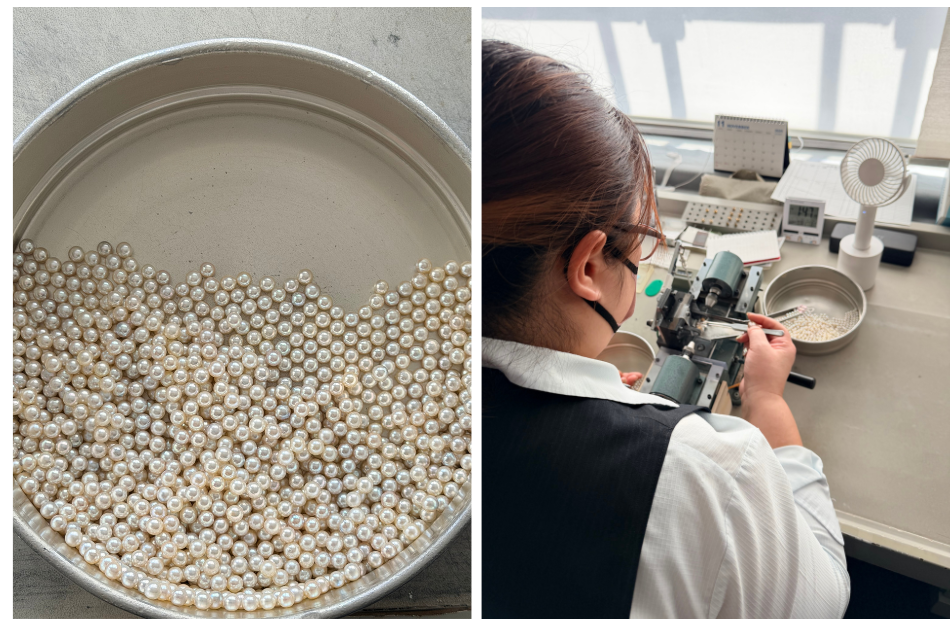
Our visit to Otsuki Pearls offered insight into this stage of the journey. In large, light-filled spaces, pearls are evaluated individually by daylight only. Color, luster, shape, surface. Decisions are made quickly by trained professionals. Some treatments remain, understandably, closely guarded company knowledge, though it was openly acknowledged that processes such as bleaching can play a role.
I was invited to try assessing pearls myself. I failed. Unless differences are obvious, the mastery required is humbling. Running my hands through baskets filled with pearls, I never once felt I was touching mere product. What I felt instead was awe.
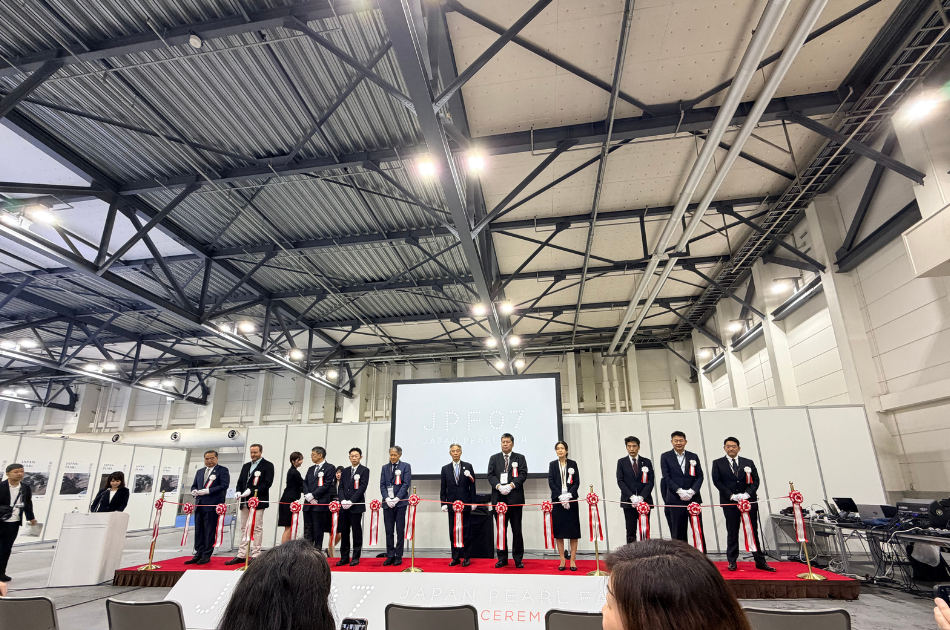
The Japan Pearl Fair
The final days were spent at the 7th Japan Pearl Fair in Kobe, where around one hundred JPEA members presented their pearls. I had expected three days to feel long. They did not. The conversations, the discoveries, the hospitality, and the time on stage sharing my experience as the only European in the group made the days pass quickly.
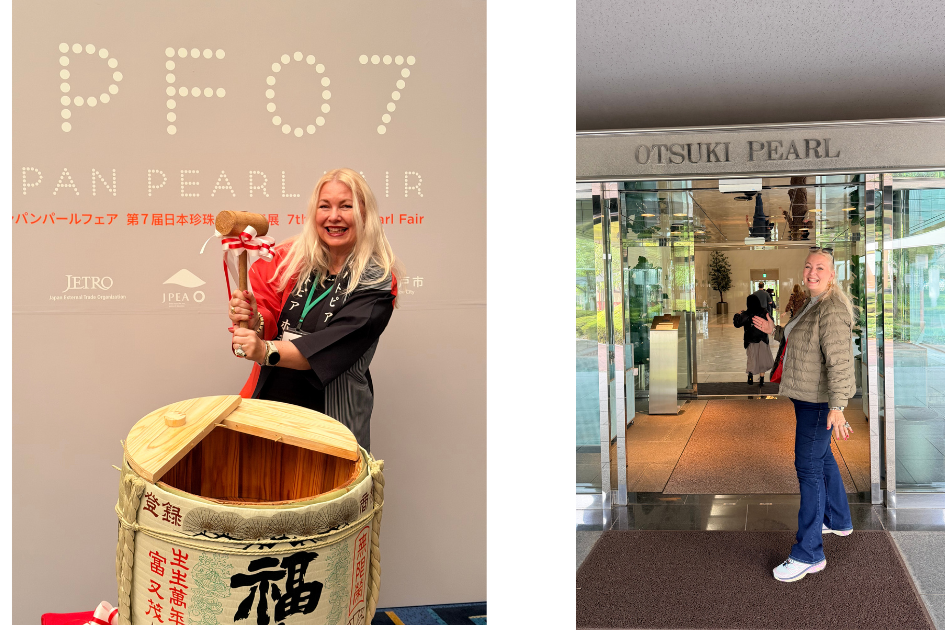
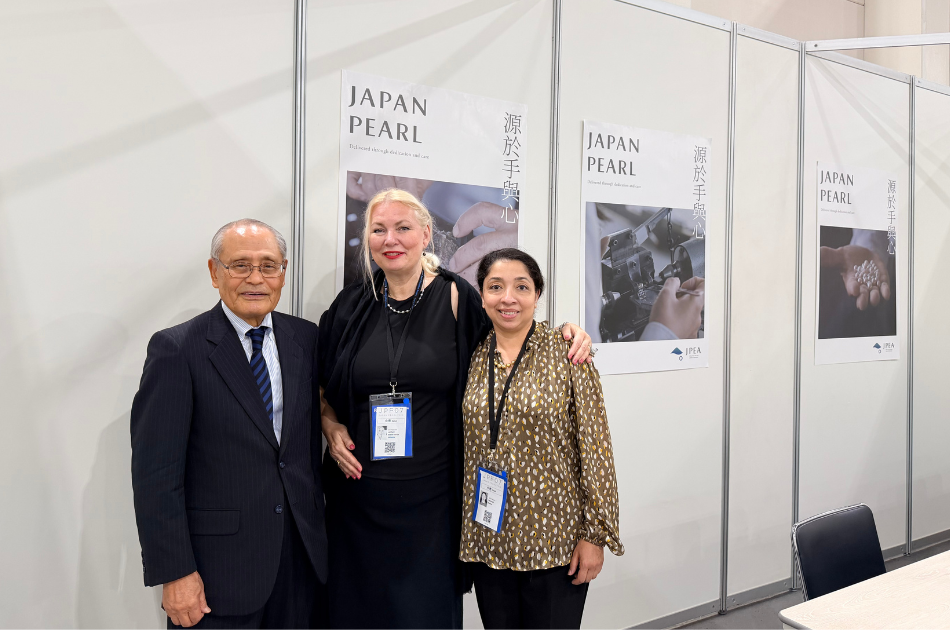
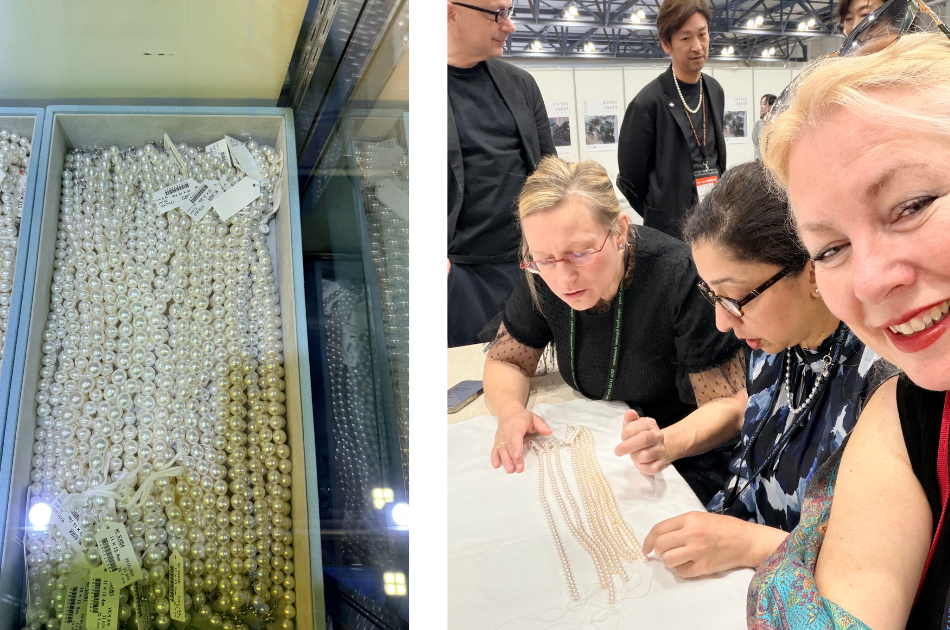
Together with peers from the United States, we spoke about the future of pearls, about embracing less-than-perfect shapes, hints of color, and new design languages that resonate with a younger generation. Pearls do not need reinvention. They need their stories to be told.
What a pearl now holds for me
I will never hold a pearl again without seeing its entire journey. The oyster. The farmer. The sea. The risks. The waiting. The trained eyes working by daylight. The decisions that shape their final form.
Pearls are admired for their luster and their quiet sense of wonder. What deepened my appreciation is understanding how much skill, patience, knowledge, and human dedication are required to bring them into being. Seeing the world inside a pearl does not diminish its beauty. It makes it extraordinary.
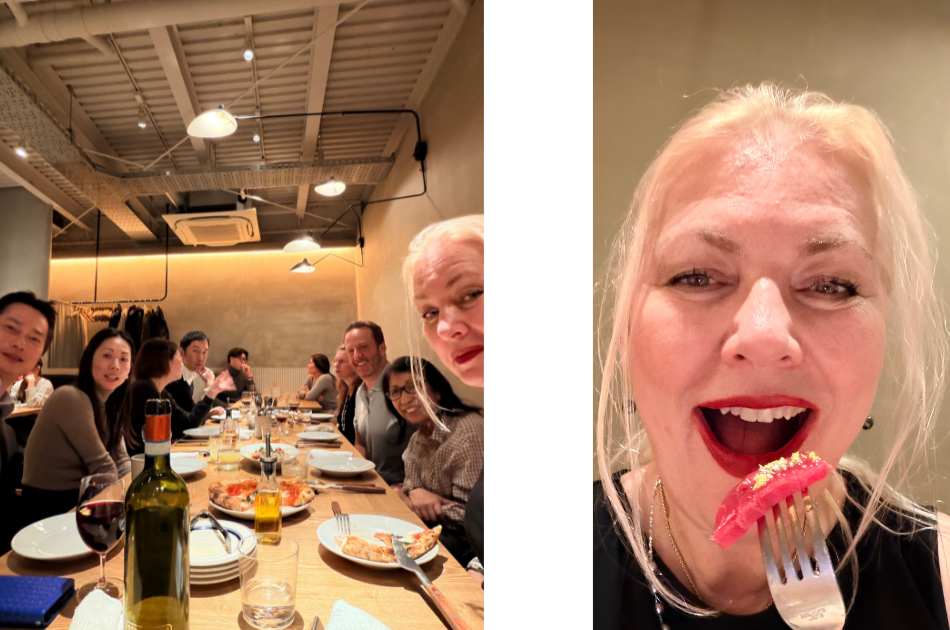
Enjoying the great company of our group with amazing food.

Heading home from Osaka to Amsterdam.