Japan Pearl Fair: A Mini-Guide to the World's Most Important Pearl Show
I knew Akoya pearls were the typical Japanese pearls. But I had no idea how many Tahitian and South Sea pearls I would find at the Japan Pearl Fair. It turns out that when these pearls were first being cultivated, they were very much in the hands of the Japanese. That is a story the industry does not tell often enough.
I traveled to Japan as a guest of the JPEA, visited working farms on the island of Tsushima and in Nagasaki Prefecture, sat in a daylight-only grading room at Otsuki Pearls in Kobe, and attended the previous edition of this fair alongside Jeremy Shepherd, president of the Pearl Association of America and founder of Pearl Paradise, and his wife, Hisano. The full account of that trip is here: The Secret Life of Akoya: 10 Days Inside Japan's Protected Pearl World.
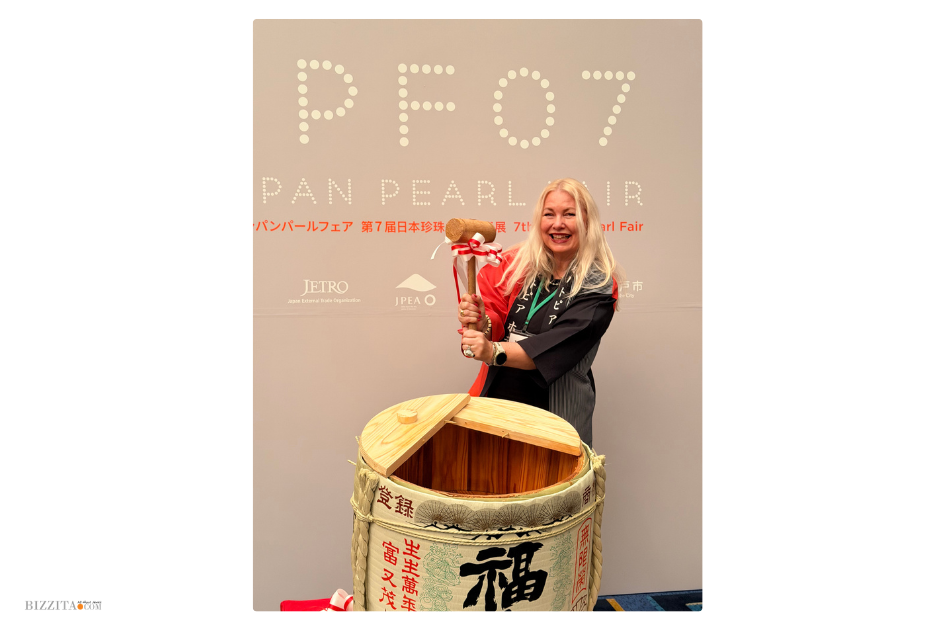
This piece is the companion: a practical guide for buyers, brand managers, and wholesalers considering the 8th Japan Pearl Fair in Kobe, June 8 to 10, 2026.
Why This Show Is Different
The Japan Pearl Fair, organized by the Japan Pearl Promotion Society, is the only major international trade show dedicated exclusively to pearls. More than 100 Japanese pearl companies gather in Kobe, the historic center of Japan's pearl export trade. It is a professional buyers-only event, no consumers, and the inventory on the floor covers the full range of what Japanese pearl professionals source, grade, and match: Akoya, South Sea, and Tahitian.
Kobe is not an accidental location. The city's pearl trading houses trace back to the early Showa era. The concentration of wholesalers, processors, and graders here is unmatched anywhere.
The History Behind the Inventory
Everything in the modern cultured pearl industry starts with Japan. Kokichi Mikimoto established his first experimental farm in Ago Bay in 1890, and by 1916, the large-scale production of round pearls using the Mise-Nishikawa nucleation method had begun. The basic biology of that process, grafted mantle tissue forming a pearl sac around a bead nucleus, still underpins nearly all bead-nucleated pearl production today, Akoya, South Sea, and Tahitian alike. (Tip: plan a visit to the Mikimoto Pearl Museum, it is absolutely worth the effort and time!)
What few buyers know is the Diamond Policy. After Mikimoto's death in 1954, Japan adopted a set of overseas production principles governing the international sharing of Japanese culturing technology. For roughly four decades, Japanese nucleators, financiers, and processors were directly involved in building the South Sea and Tahitian pearl industries in Australia, French Polynesia, Indonesia, and the Philippines. The policy ended in 1998 due to circumstances.
The practical effect: the Japanese pearl trade carries deep institutional knowledge across the three major categories of saltwater-cultured pearls. When you examine South Sea or Tahitian material at the Japan Pearl Fair, you are dealing with companies whose expertise in those categories is generational.
The Three Pearls You Will Find at the Fair
Akoya: The Benchmark
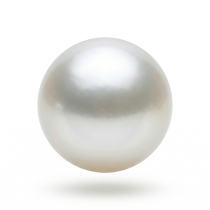
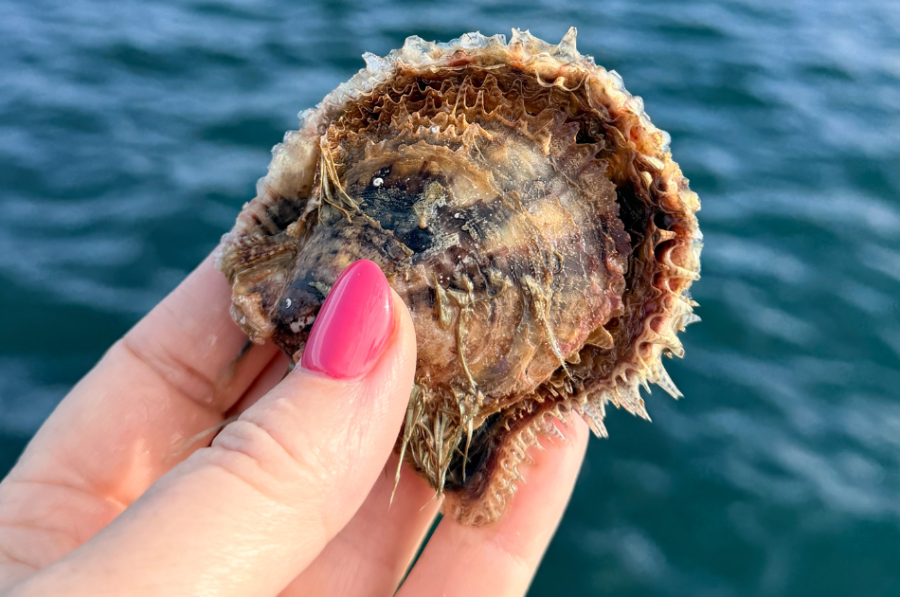
Akoya pearls are produced in the Pinctada fucata martensii, a small saltwater mollusk farmed in the protected bays of Mie, Ehime, Nagasaki, and other prefectures along Japan's southern coastline. Most pearls fall between 6 and 8 millimeters, occasionally reaching 10 or above. The defining characteristic is luster: sharp, mirror-like reflections produced by slow, cold-water nacre deposition during winter harvests. No other pearl in the same size and price range replicates it consistently.
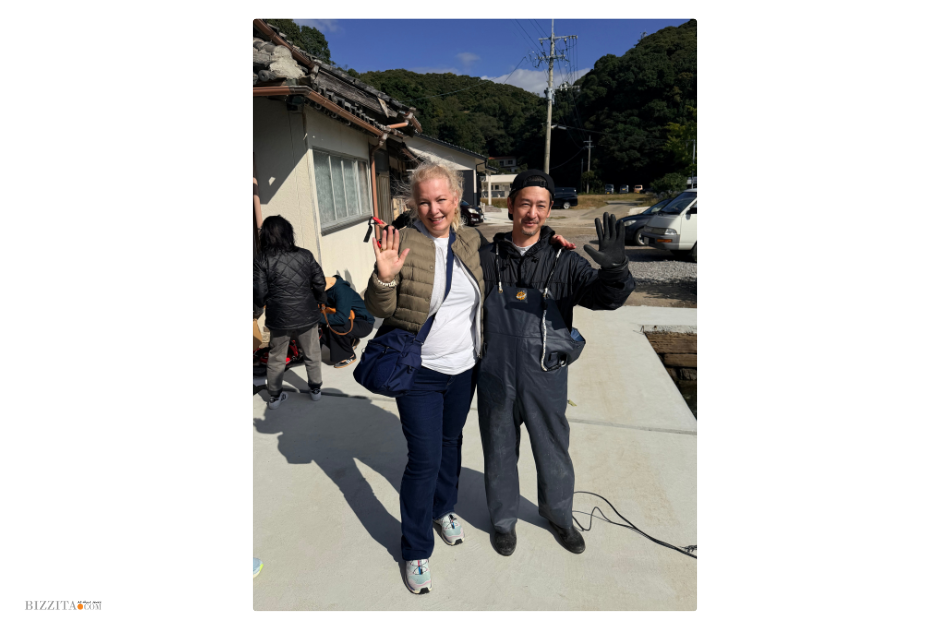
At the Kitamura Pearls Oyamakoshi Farm on Tsushima, I held baskets of one-year-old oysters barely larger than a two-euro coin, and three-year-olds already nucleated and carrying pearls months away from harvest. The physical reality of that timeline, years of maintenance in open water, subject to typhoons, disease, and temperature swings, reframes the economics of what you are buying.
Japanese Akoya production has declined sharply. Annual output reached approximately 13.2 metric tons in 2023, the lowest recorded level, down from over 100 tons at peak. A birnavirus called PiBV, identified in the early 2020s, has caused serious juvenile shell mortality, and the farming population is aging with limited succession. The finest Akoya material is genuinely scarcer than it was a decade ago.
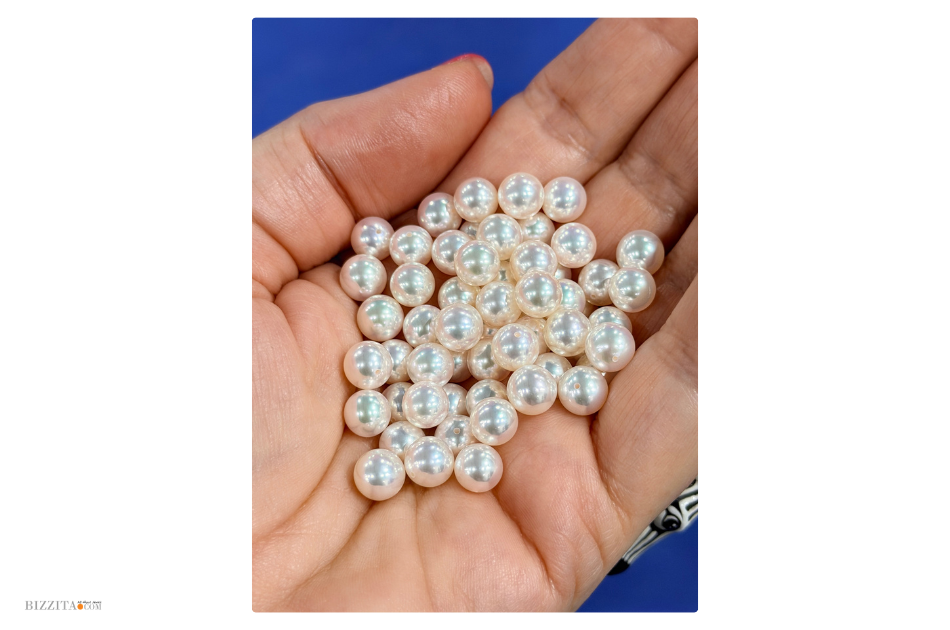
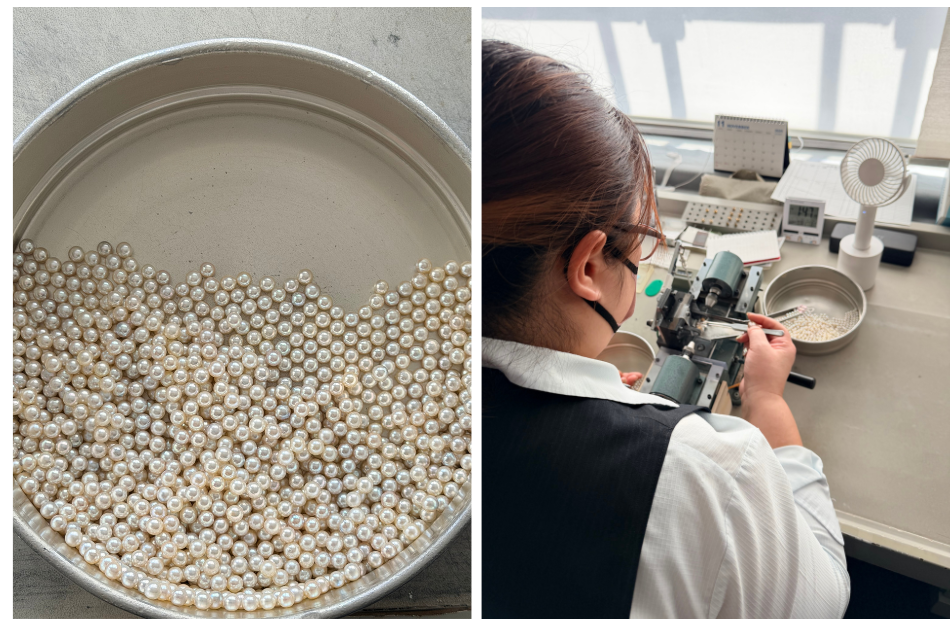
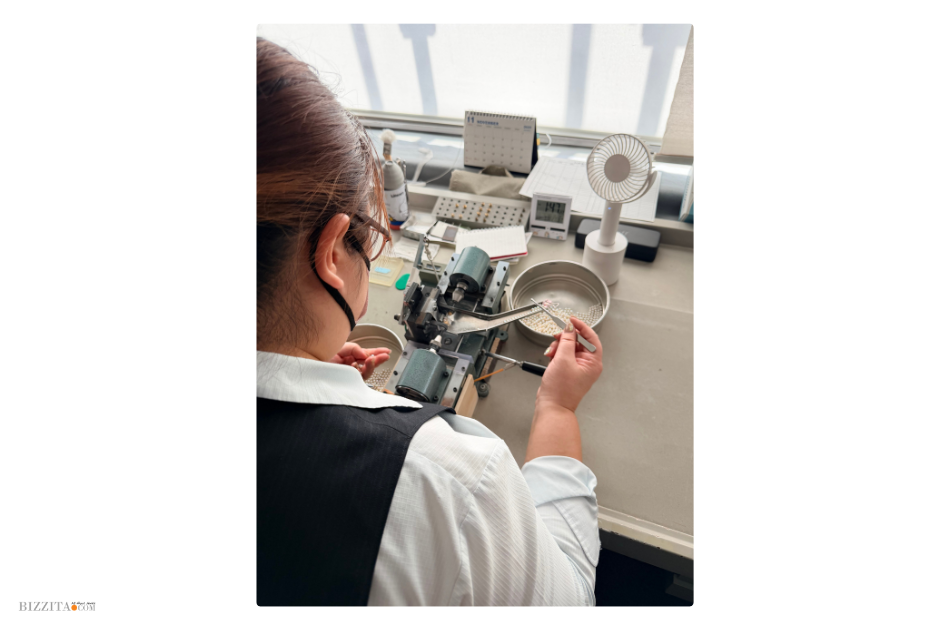
At the fair, you will see the full range of quality. Two strands can carry the designation and look quite different. I tried assessing pearls myself in the grading room at Otsuki Pearls in Kobe, where evaluation is done only under natural daylight. I failed unless the differences were obvious, very obvious! It is a skill, and the skill involved takes decades to develop. I hope you will be at the show and handle the material yourself. That physical touch, to look at it from all sides, to evaluate and compare, that is also one of the beautiful things that one can do when visiting the show in person.
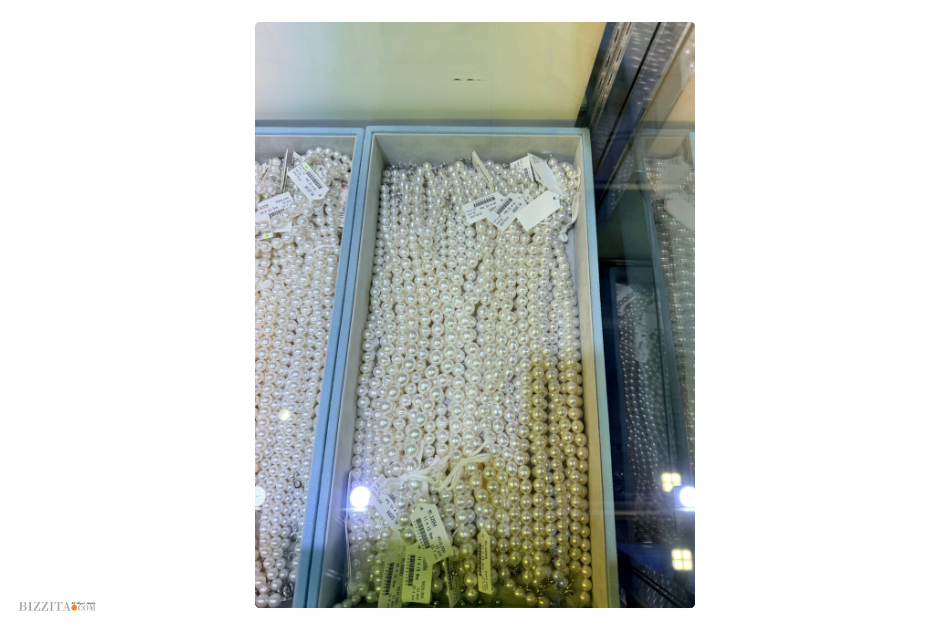
South Sea: Size, Nacre, Natural Color
South Sea pearls are produced by Pinctada maxima, the silver or gold-lipped oyster, farmed primarily in Australia, Indonesia, the Philippines, and Myanmar. Most pearls range from 9 to 18 millimeters, with growth periods of two to four years. The nacre character is satiny and diffused, quite different from Akoya's sharp reflection. White and golden body colors form naturally; the finest examples need no treatment.
Japanese pearl houses with South Sea expertise tend to carry well-matched, carefully graded loose strands. If you are sourcing matched pairs or sets above 13 millimeters for a collection, Kobe is a serious option! But to be honest, I saw such a wide variety of South Sea at the 7th Japan Pearl Fair. You will find what you need; guaranteed!
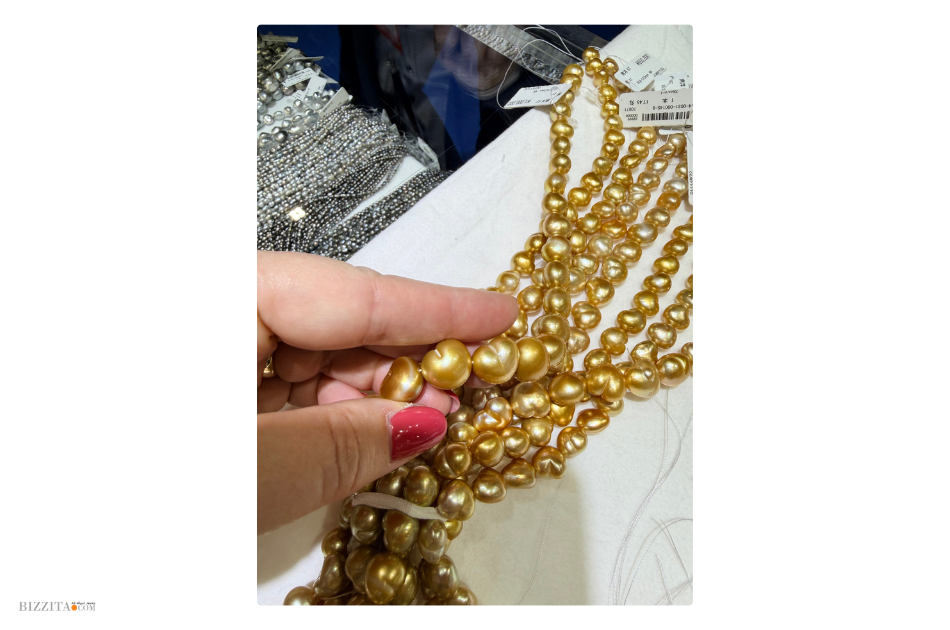
Tahitian: Natural Color, No Treatment Required
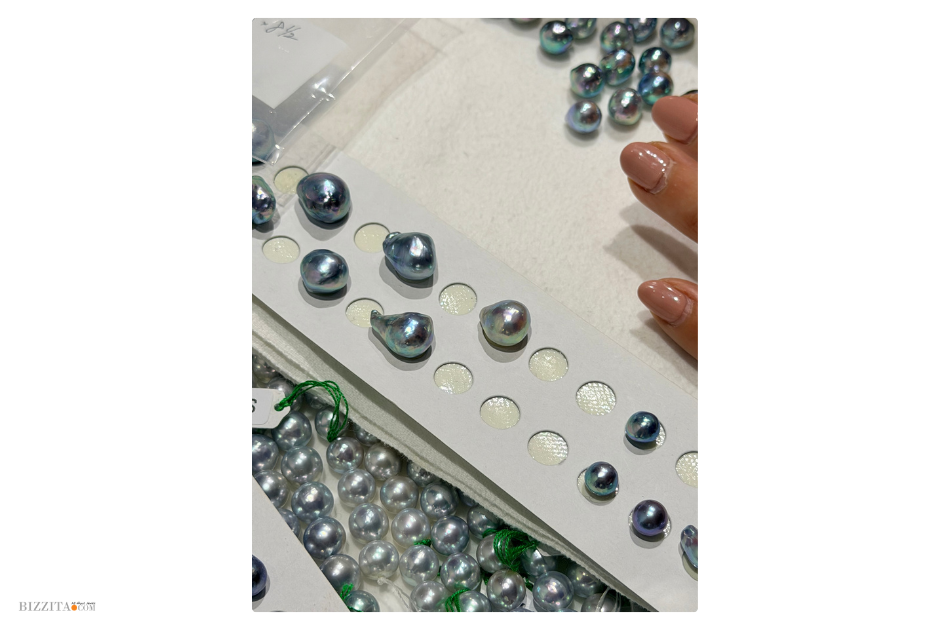
Tahitian cultured pearls are produced by Pinctada margaritifera cumingii, the black-lipped oyster, farmed in French Polynesia. Their body colors, charcoal, peacock, cherry, pistachio, and aubergine, form naturally without dye. Per CIBJO standards, a pearl described as Tahitian must be produced in French Polynesia from this specific mollusk. The range of overtones in high-quality Tahitian material is remarkable and, in my experience, consistently underestimated by buyers who have only seen average commercial lots.
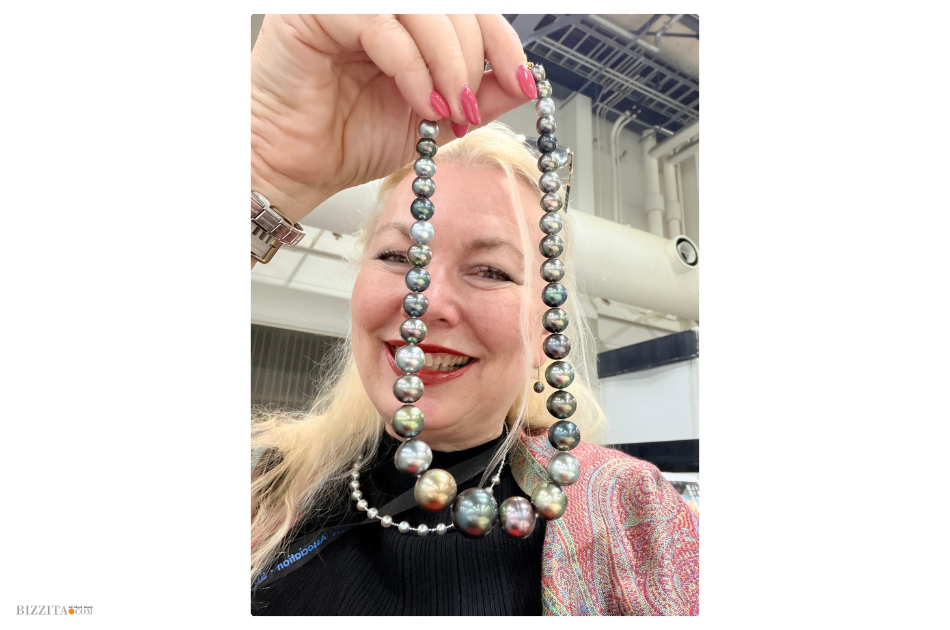
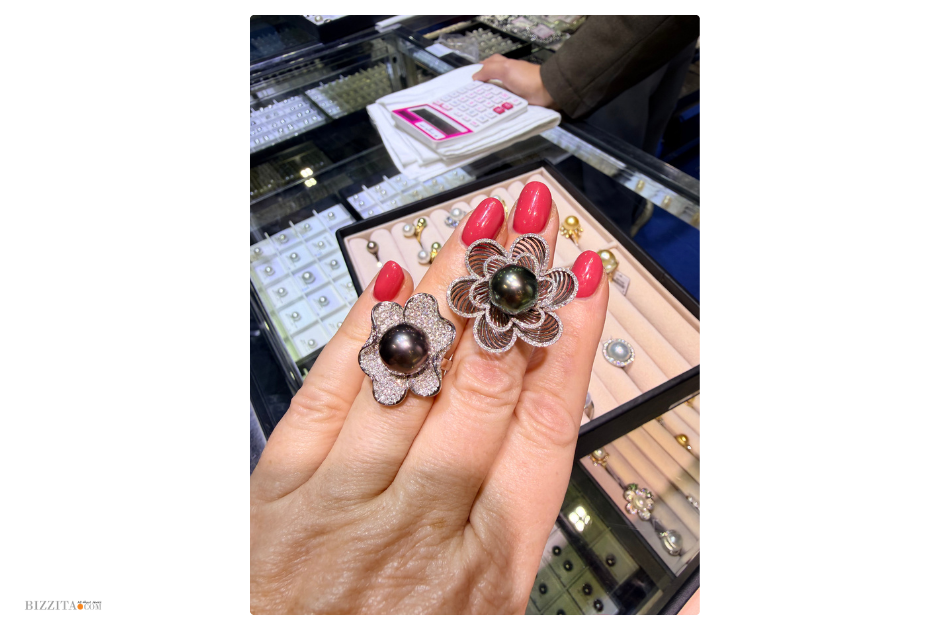
The Tahitian inventory at the Japan Pearl Fair was a surprise for me. I had no idea that the Japanese traded these pearls in the quantities and qualities they do, and yes, I did pick up a beautiful peacock Tahitian strand myself. A dream came true! Some exhibitors showed peacock and cherry overtone strands that would hold their own at a specialist auction. For buyers who have been sourcing Tahitian pearls in Hong Kong or at the European shows and assume they have seen what is available, Kobe is really worth reconsidering.
| How the Three Compare | Akoya | South Sea | Tahitian |
|---|---|---|---|
| Mollusk | Pinctada fucata martensii | Pinctada maxima | Pinctada margaritifera cumingii |
| Typical size | 6 to 8 mm | 9 to 18 mm | 8 to 16 mm |
| Luster character | Sharp, mirror-like | Satiny, diffused | Satin to silky |
| Natural color | White to cream, rose or silver overtones | White, silver, or golden | Charcoal, peacock, pistachio, cherry |
| Growth period | 10 to 24 months | 2 to 4 years | 18 months to 2 years |
| Main farming regions | Japan | Australia, Indonesia, Philippines, Myanmar | French Polynesia |
What Sets Japanese Pearl Professionals Apart
Two things stood out throughout the trip. The first is patience as a structural value. Longer growth cycles are due to Japanese farmers historically choosing quality over yield. That is not a marketing position; it is a generational commitment to the sea. At the Sasebo Pearl Co. farm in Nagasaki Prefecture, I watched women on floating platforms clean oyster nets by hand, removing small organisms and returning the oysters carefully to the water. No visible pressure to optimize. Just repetition and attention. The second is the depth of expertise in grading and matching. A fine Akoya strand requires sorting through thousands of pearls for consistency in luster, overtone, shape, and surface. The technicians doing that work in Kobe are increasingly difficult to replace, and fewer younger workers are entering the profession. What is available now is worth sourcing directly.
Who Can Attend
The Japan Pearl Fair is a trade-only event. No consumers, no one under 16. International buyers are actively encouraged, and the organizers provide specialized pearl concierges to help overseas visitors navigate the show efficiently. Online participation is also possible for buyers who cannot travel to Kobe.
Overseas buyers completing purchases of USD 30,000 or more during the fair qualify for support programs. Those presenting an invoice of USD 50,000 or more are eligible for complimentary accommodation at the next edition.
The 8th Japan Pearl Fair. Kobe, June 8 to 10, 2026.
Register at japan-pearlfair.com
Her full account of visiting Japan's Akoya pearl farms is at The Secret Life of Akoya.